
HEIMATLIEDER ALLSTARS - Booking
-
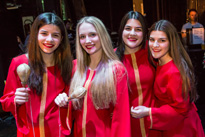
In 2013 the Berliner Hauptstadtkulturfonds sponsored the art project ‘Heimatlieder aus Deutschland’ (Folksongs from Germany), which featured the music of immigrants (the so-called German guest)- and contract workers in a new context and, for the first time, as a collection of artists on one stage. Originally conceived as a one-off performance, ‘Heimatlieder aus Deutschland’ has become one of the most successful cultural projects in Berlin. The artists span from more than 13 countries and have played enthusiastic performances in more than 30 concerts and in front of more than
20,000 spectators all over Germany and abroad. Each performance has received a standing ovation.
In 2015 a small group from ‘Heimatlieder aus Deutschland’ started performing their traditional music in a new style, naming themselves the “Multitonic Phonic”. After the successes of their first appearance in February 2016 (Goethe Institute Prague) and a sold out concert at ufaFabrik in Berlin (December 2016) they knew they were ready to take the the latest German and European cultural phenomenon to new audiences. 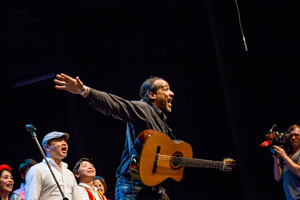
click to enlarge

Story of Multitonic Phonic
-
German music culture has long been an undercover immigration culture and has never been more interesting since the integration of migrated music. Starting in the 1950s, immigrants have been influencing the everyday life of the Germans with their folk songs brought from their homelands. Nowadays this migrated music is heard in each and every German city.
Nevertheless, it was a big surprise when in 2103 the first concert of the Berlin art project ‘Heimatlieder aus Deutschland’ was sold out (Komische Oper Berlin). Afterwards the audience stood on their chairs, dancing and celebrating together with the artists. Further performances followed, among them in the Semperoper Dresden, Komische Oper Berlin (2015, sold out), the Thalia Theater Hamburg (2016, sold out), the Munich Kammerspiele or the Schauspiel Cologne (2014, sold out).
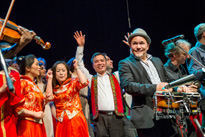
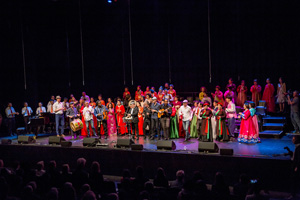
They all had one thing in common: they were enthusiastically celebrated. The Multitonic Phonics are now taking their variation of traditional German music to an international audience, combining up to 8 languages from all over the world with just 16 musicians and integrating new instruments and singing techniques into the songs - so becoming an international, folk big band. -
click to enlarge

Multitonic Phonic 2017
-
Innovative traditional German folk
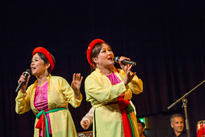
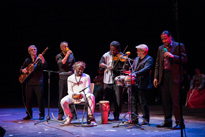
The Multitonic Phonics are up to 16 German artists with roots in Vietnam, Serbia, Cuba, Morocco, Algeria, Portugal, Austria, Ukraine and Cameroon who have overcome linguistic barriers by exchanging their musical and cultural backgrounds - leading them to develop a new folklore. This is exactly what German traditional music needed, as - over the decades – it has become nothing else than kitschy Schlager. The Multitonic Phonics show an immigrated, new German folk culture that naturally developed itself over more than 30 concerts with changing artists on stage. It adapts a centuries-old musical repertoire to German and European everyday life.
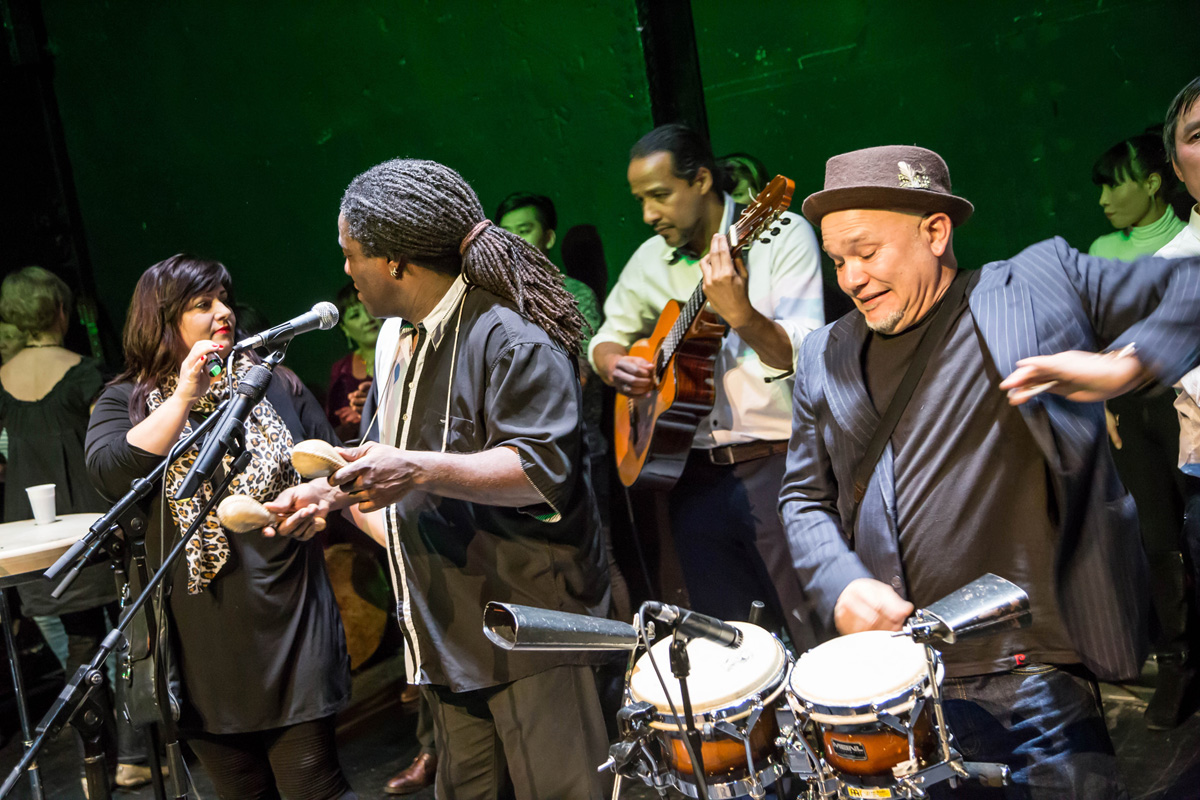
So far, collaborations have been established between Serbian, Moroccan, Cuban, Vietnamese (all Berlin based) and Cameroonian (Augsburg based) artists who are expanding and complementing their respective folksongs. For the first time in August 2014 at the Foreign Office’s Ambassadors Conference, then in December 2014 at the ufaFabrik in Berlin, they showed their imported folklore to an enthusiastic audience that went crazy when, for example, a Serbian folk song met Cuban percussion, a Moroccan love song from the 15th century was accompanied by a Vietnamese monochord, Portuguese fado met Mongolian overtone singing, or an interpretation of an old German folk song was sung with African- Moroccan vocal techniques. Always traditional and yet quite new, clearly showing what happens when diversity has a positive effect on the development of a unique sound.
‘Multitonic Phonic – performances promote the integration of regional artists and local ensembles into their performances so that each concert becomes a unique happening of modern traditional German and European music.
Management: Jochen Kühling, Run United
T: +49 (0)176 – 21 66 79 31
+44 (0)1934 64 76 39
E: info at run-united.com
click to enlargeLoading...
click to enlarge
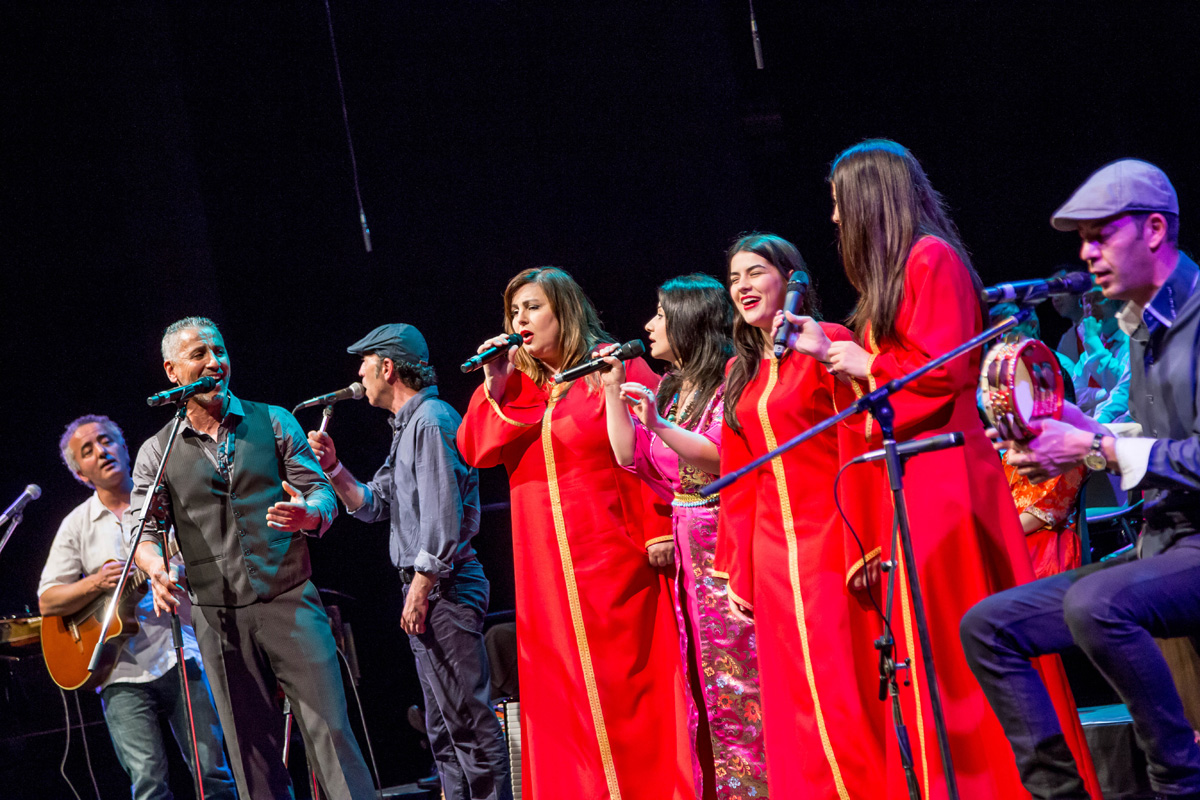
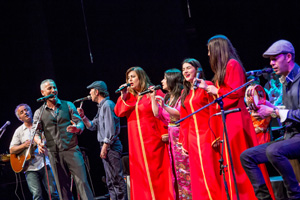
A Multitonic Phonic concert
-
Length: 90 to 100 minutes without break
Scope: 6-7 ensembles / artists, between 16 and 40 artists on stage (depending on the participation of local artists)
Aftershow-Party: possible
The performance can be a moderated concert.
The moderation intensity is flexible and depends on the location and requirements of the local organizer. On larger stages explanatory moderations take place before each artist. Moderator is co-inventor and producer Jochen Kühling. In the casual moderation part, he describes the culture and origin of the artists, interesting facts about the (occasionally) very unusual instruments and the content of the songs. During the performance, all the performers are on the stage.
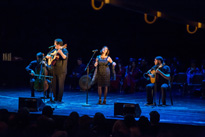
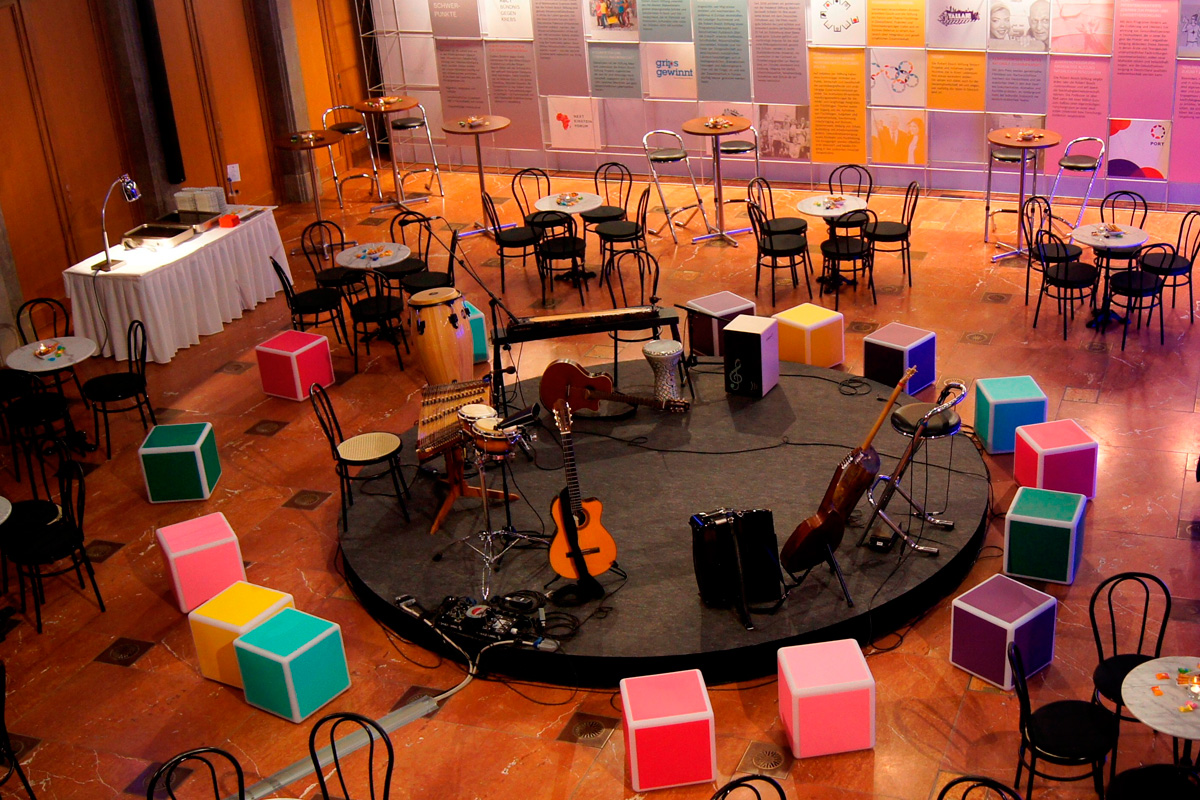
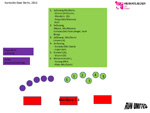
The stage design adapts itself to the respective local conditions. This allows the artists to sit in a semicircle, the whole set up already installed for their performance, or they perform one by one, then including a small moderation part and a brief conversion. At the end of the concert, there is a big joint final of two to three songs, usually with enthusiastic participation of the audience!
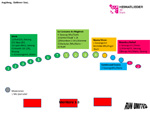
Technique/Staff: (example stage set-up see PDF below), if conversions are necessary two stage assistants are required.
Sound: Vocal and instruments need analogue microphones or DI boxes. There are no amplifiers, as well as no complicated structures, such as drums. If an Asian choir is involved, a piano / grand piano is usually required.
Light: No special requirements.
Backstage: A total of 4 - 5 rooms, but at least two larger rooms, each for 7 persons, one with mirror for costume and make-up check is needed.Depending on the size and number of local artists also several rooms.
Arrival: The ensemble will arrive between 2pm and 3pm on the day of the performance. At 3 pm sound check begins, which ends at 6.30pm (latest).
Start of the concert: depending on the organiser between 7:30pm and 8:00pm. In the normal course of the concert, the stage and the backstage area are ready for cleaning around 11pm.
Special: When we are there, the artists continue to sing and play after the concert, either spontaneously in a nearby location, often together with regional artists, or even at a planned and previously announced after-show party. This should be negotiated separately. -
click to enlarge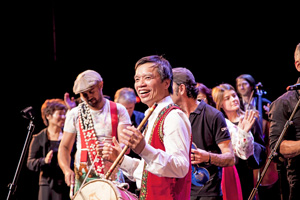
click to enlarge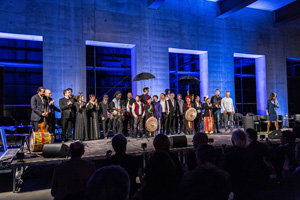
click to enlarge


The Stage
Press review
- "Whoever suspects traditional German song material will rub his eyes." (Stuttgart newspaper)
- "At the end of the two-half-hour show, the audience in the Thalia Theater is out of the house, would like to storm the stage." (Hamburger Abendblatt)
- "These folksongs mark the rare moment as pop becomes avant-garde." (Kölner Stadtanzeiger)
- "Who would have thought that folksongs from Germany might sound so europhic, so manycolored positive and sometimes reflective." (SWR 2)
- "The people who were there are still getting goose bumps today!" (Radioeins Radio)
- "To explain the amazing effect of this particular evening is hardly possible" (Neue Szene Augsburg)
- "And the theater seats suddenly seem obstructive" (Neuss-Grevenbroicher newspaper)
- "It cannot get any better" (Ex- German Federal Foreign Minister Frank Walter Steinmeier)
more reviews
Videos
Credentials
Tel.: +49 (0)30-18 17 26 39, 6-D@auswaertiges-amt.de
Mona Rother, Friedensbüro in the cultural town of Augsburg
Tel.: +49.:+ (0)821 | 324 3261, mona.rother@augsburg.de
Manni Spaniol, musical director ufaFabrik Berlin
Tel.: Tel 030-75503158, musik@ufafabrik.de
Ulrich Lenz, chief dramaturg Komische Oper Berlin
Tel.: +49 (0)30 20260-404, u.lenz@komische-oper-berlin.de
Joachim Lux, Director Thalia Theater Hamburg,
Tel.: +49 (0)40- 32814-100, joachim.lux@thalia-theater.de
Moritz Puschke, Managing Director of the German Choir Association
Tel.: +49(0) 170-2118636, mpuschke@deutscher-chorverband.de
Harald Müller, Head of Cultural Affairs City of Neuss
Tel.: +49 (0)2131-90-4100
All photos: Melanie Stegemann

Postfach 36 05 21, D-10975 Berlin